A few days ago, my younger brothers restored an old family photograph using ChatGPT. The original photo was taken many years ago with a film camera, so it was blurry and faded. But with the help of technology, the photo became clear, sharp, and beautiful again.
When I saw it, many memories came back.
I jokingly told my brothers, "Since you used my old photo, you now owe me royalty. If I live another forty years, you should buy me one iPhone every four years. That means only about eight iPhones."
One of them laughed and said, "That is too much. For that, we need at least one hundred photos." Another said, "Please give us some discount. Don't make it so hard for us."
It was only a family joke, but behind that joke is a deeper story.
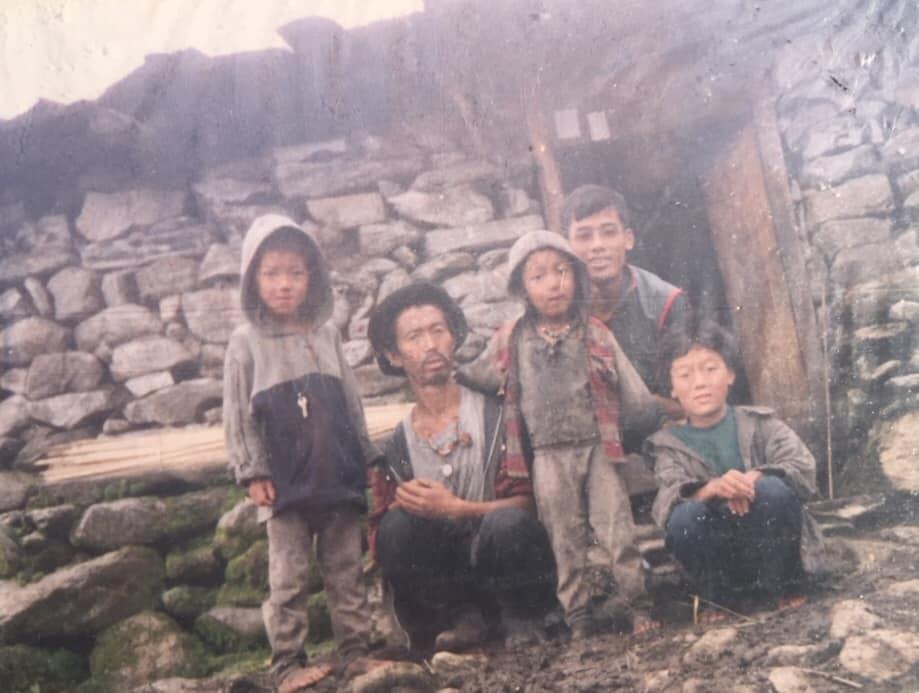
These brothers now live in the United States. They are American citizens. But they were born in Nepal. They grew up in Nepal. They came from this soil, this family, this struggle, and this story.
When they were young, we helped guide them and support them. Later, they went to America, built their lives, became financially stronger, and then began supporting others back in Nepal.
When I started the school, one of my brothers helped sponsor five students. He was able to do that because someone had once helped him, guided him, and opened a path for him. In the same way, many Nepalis who once received support in Nepal are now living in America, Australia, and other countries, and they are quietly helping students, families, churches, and communities back home.
At this time, my two brothers have paused their regular support to our school, but not because they have stopped caring. They have taken responsibility for three younger brothers in the family. My youngest brothers are now studying in school, one in grade five and another in grade seven. Supporting them is also a meaningful responsibility.
This morning, I sent them a message: "You are living your lives well. You have become people who think about the larger family and support others. Thank you. Without you, we would not have come this far."
This family story brings me to the issue of NRNA and Nepali citizenship.
How should Nepal view Nepalis who live abroad?
Should we say to them, "You went to America. You became different. You no longer have any right here"? Or should we say, "Wherever you live, you were born in Nepal. You are part of Nepal. Your relationship with this country remains"?
In my view, citizenship is not something that should be treated casually, as if people simply throw it away. A person born in Nepal remains connected to Nepal for life. A passport may change. A legal status may change. But the relationship with one's birthplace does not disappear so easily.
My brothers still keep their old Nepali citizenship papers and passports. They have not forgotten Nepal. But legally and politically, the state has created distance. That is why I say: in many cases, Nepalis have not truly abandoned their citizenship; rather, the state has acted as if it has taken it away from them.
The wiser path for Nepal would be to say clearly and generously: "You were born in Nepal. Your relationship with Nepal remains. You are always welcome to come, live, invest, own property, support your family, and contribute to society."
If Nepal did this, many Nepalis abroad would remain deeply connected. They would come back more often. They would invest. They would maintain land and homes. They would bring their children to Nepal. They would support schools, churches, communities, and local development. Many would even return in old age to spend their later years in the land of their birth.
Many countries around the world are trying to attract people from outside. Some countries offer long-term visas for those who deposit or invest a certain amount of money. They welcome outsiders because they understand the value of people, capital, experience, and connection.
But Nepal sometimes seems to push away its own children.
Canceling professional licenses because someone lives abroad, creating unnecessary citizenship complications, limiting rights, and then later creating special provisions for NRNs is not a wise path. It is like first creating the problem and then pretending to offer the solution.
The simpler and better solution is this: Let Nepalis remain Nepali.
If someone was born in Nepal, do not break that birth relationship. Even if they become citizens of another country, keep their connection with Nepal open, honored, and legally secure. If they want to return, welcome them. If they want to invest, make it easy. If they want to support their village, family, school, or community, respect them.
When I lived in America, I operated small businesses. I saw how entrepreneurs were respected. Even with a small investment, there was room to work and grow. But in Nepal, even after investing much more, I have often felt like I was planting corn in the middle of a marketplace or pouring water into sand. To survive, one often needs either endless money, political connections, or some form of power. This environment must change.
A country should not push its people away. It should welcome them with dignity.
People return where they are respected. People invest where they are trusted. People remain connected where they are honored.
My brothers live abroad, but they are not strangers to Nepal. They have supported family members, helped students, and remained connected to their roots. There are thousands of Nepalis like them around the world. Nepal should not treat them as outsiders. Nepal should treat them as sons and daughters whose branches have spread across the world but whose roots remain in Nepal.
So my appeal is simple:
Stop the drama of taking away citizenship. Let Nepalis remain Nepali. Wherever they live, let their relationship with Nepal remain alive.